
Water and HVAC control guide
Pump control panel design: duty, standby, VFD and alarm decisions
Translate pump duty, process instruments, availability and remote interfaces into a reviewable control-panel architecture.
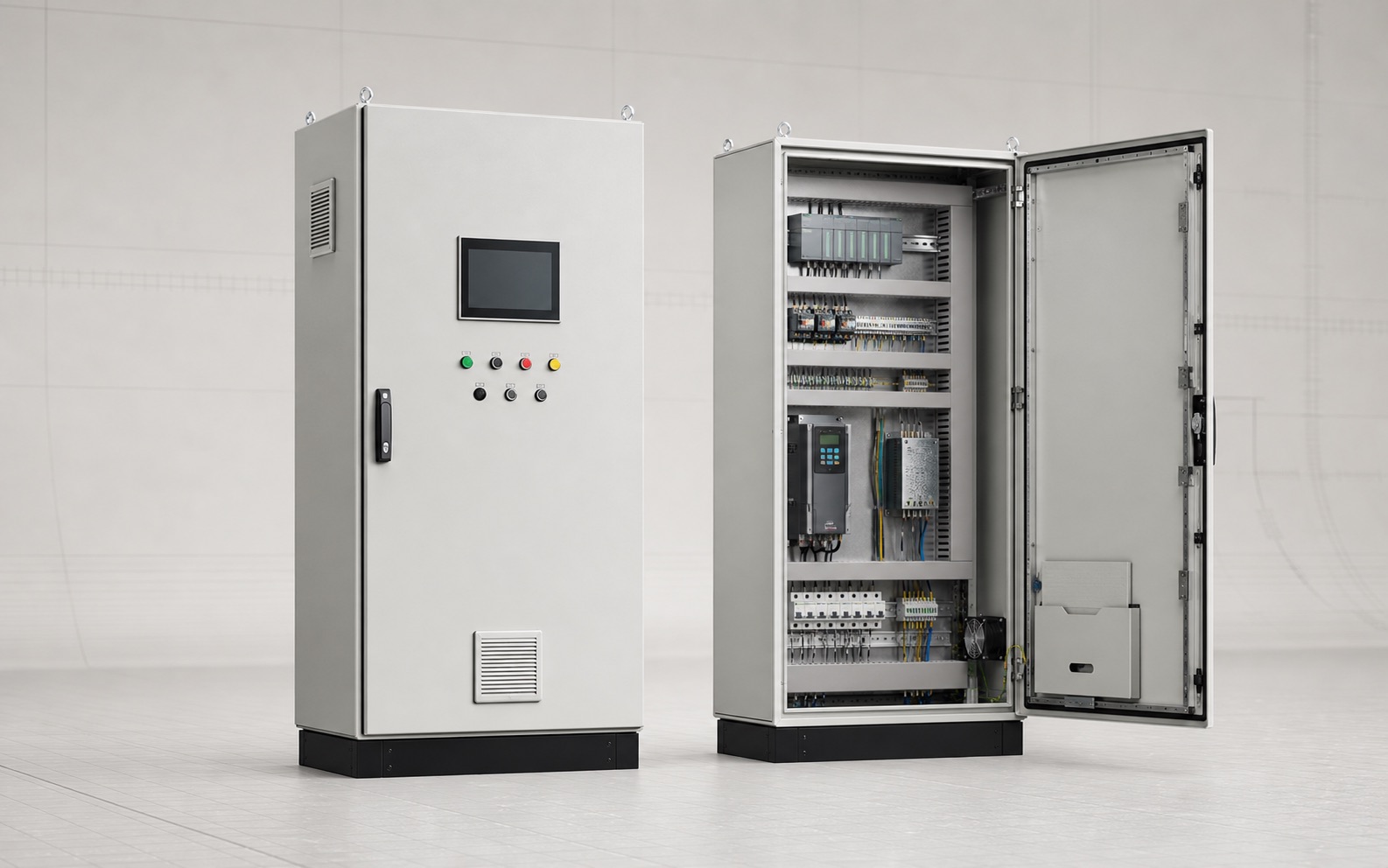
Begin with the hydraulic duty and required service availability, not the cabinet. Define pump and motor data, single or lead/lag/standby operation, process variable, VFD or fixed-speed method, dry-run and overload protection, alarm behavior, remote interface and site-commissioning plan.
Apply the guide
Connect the answer to project evidence.
This guide is designed to move from a search question to a reviewable technical basis. Start with the first three checks and record every missing input as an assumption.
- Define the service duty
- Choose motor-control methods
- Write the operating sequence
Water and HVAC control guide framework
Six checks for this decision
Apply these checks to pump control panel design: duty, standby, vfd and alarm decisions so assumptions are visible before the BOM, drawing, procurement release or shutdown plan is approved.
Define the service duty
Record design and minimum flow or pressure, operating points, number of pumps and whether one failure may interrupt service.
Choose motor-control methods
Select fixed-speed, soft-start or VFD operation from process control, starting, energy and availability requirements.
Write the operating sequence
Define lead/lag, alternation, standby transfer, manual/local operation, restart after power loss and maintenance modes.
Map instruments and protection
List pressure, level, flow, valve, dry-run, seal, temperature, overload and emergency signals with failure behavior.
Define HMI and remote interfaces
Agree local controls, setpoints, alarms, trends, BMS/SCADA points, communication protocol and command ownership.
Separate FAT and site tests
Simulate the sequence and I/O in the workshop, then commission real instruments, rotation, process loops and hydraulic performance at site.
Buyer checklist
Inputs for water and hvac control guide
- Pump and motor schedule
- Operating points and process objective
- Lead/lag/standby philosophy
- Instrument and alarm list
- Local/remote interface matrix
- FAT and site commissioning plan
Common mistakes
Risks in this decision
- Selecting VFDs from motor kW without the pump duty
- Leaving standby-transfer behavior undefined
- Ignoring sensor-failure and dry-run cases
- Treating simulated FAT as proof of hydraulic performance
Common Water and HVAC control guide searches
Answers before the technical release
These answers summarize the guide. Final compatibility, ratings, accessories and availability still require the exact article number and current source information.
What is the direct answer for this water and hvac control guide?
Begin with the hydraulic duty and required service availability, not the cabinet. Define pump and motor data, single or lead/lag/standby operation, process variable, VFD or fixed-speed method, dry-run and overload protection, alarm behavior, remote interface and site-commissioning plan.
What information should a buyer prepare for water and hvac control guide?
Prepare pump and motor schedule, operating points and process objective, lead/lag/standby philosophy, instrument and alarm list, local/remote interface matrix. Missing information should be recorded as an assumption before release.
Which decisions can change the result?
Review define the service duty, choose motor-control methods, write the operating sequence, map instruments and protection. The complete project and article-number context determines the final answer.
What are the common mistakes in water and hvac control guide?
Selecting VFDs from motor kW without the pump duty; Leaving standby-transfer behavior undefined; Ignoring sensor-failure and dry-run cases; Treating simulated FAT as proof of hydraulic performance.
How should the final answer be verified?
Confirm current ratings, compatibility, lifecycle, mandatory accessories and application limits against the complete Siemens article number and cited manufacturer information before quotation or technical release.
Continue the decision
Pages related to water and hvac control guide
Technical references
Sources for this guide
Ratings, compatibility and lifecycle details referenced in pump control panel design: duty, standby, vfd and alarm decisions must be verified again against the exact article number at quotation.
Apply this guide