
HVAC & Building Utilities application background
HVAC & Building Utilities
Fan, pump, compressor and utility controls focused on energy, staging and reliable plant operation.
Industrial HVAC and utility plants must react to changing demand while preserving equipment limits and service continuity. Drive control, sensor quality, sequencing and interfaces to the building or plant management system have a direct effect on efficiency and uptime.
Discuss this application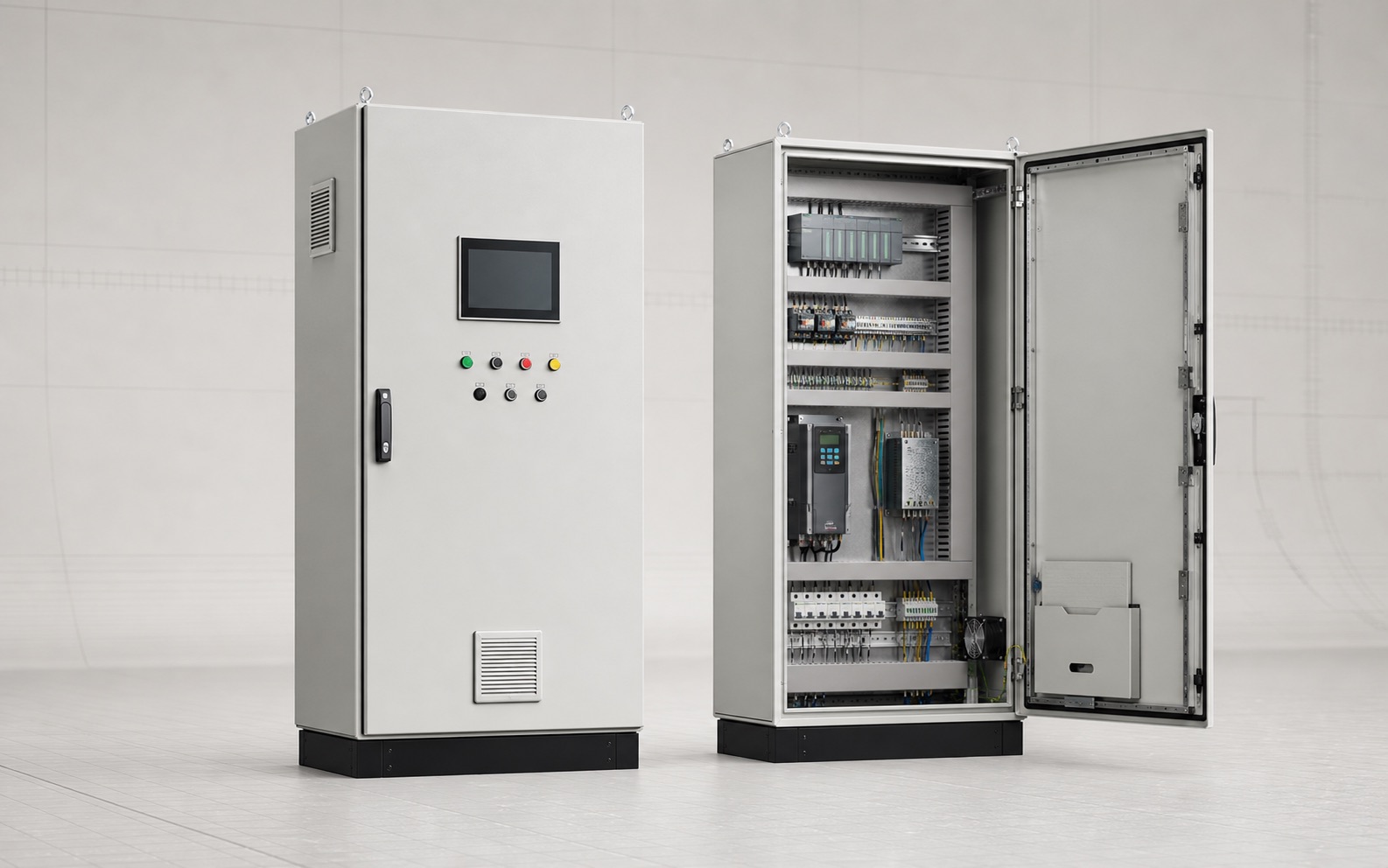
Application lens
Connect the process duty to the panel design.
The visual shows a relevant control-system reference, not a completed customer project. The actual architecture is released from the process description, load list, environment and acceptance scope.
- Variable-torque drive selection
- Harmonics and power quality
- Mechanical-room temperature and dust
Operating priorities
What this process must achieve
- Match airflow, pressure and water flow to demand
- Stage multiple units efficiently
- Protect equipment from low-flow and high-pressure conditions
- Provide clear BMS/plant interfaces
Typical hvac & building utilities loads
Equipment in scope
- Supply and exhaust fans
- Chilled/condenser water pumps
- Cooling towers
- Air compressors and utility skids
HVAC & Building Utilities control architecture
A practical system structure
Each block is adapted to the scale, availability target, site environment and owner standards of this hvac & building utilities application.
Motor control
VFD, soft starter or fixed-speed feeder selected by process need and energy profile.
Automation
PLC or packaged controller with trend, schedule and equipment sequencing.
Power
24 V supply and UPS sized for controls and communications.
Integration
Hardwired or protocol interface with named points and ownership boundaries.
Control functions
HVAC & Building Utilities logic
- Static-pressure and differential-pressure PID
- Lead/lag equipment rotation
- Minimum speed and anti-surge limits
- Damper/valve permissives
- Filter and equipment alarms
- BACnet/Modbus gateway interface where specified
Panel design
Application priorities
- Variable-torque drive selection
- Harmonics and power quality
- Mechanical-room temperature and dust
- Fire/smoke and life-safety interface boundaries
- Service bypass requirements
- Clear BMS point schedule
Design inputs
Data to provide
- Fan/pump curves and motor list
- Control setpoints and operating schedule
- Equipment staging philosophy
- BMS protocol and point list
- Supply/fault data
- Required bypass and emergency modes
Common HVAC & Building Utilities searches
Answers before the industry RFQ
Use these answers to prepare the process, architecture and acceptance basis. The final component and panel scope still follows the approved project data.
What information is needed to quote hvac & building utilities automation?
Prepare fan/pump curves and motor list, control setpoints and operating schedule, equipment staging philosophy, bms protocol and point list, plus the destination, acceptance scope and required handover documents.
Which control functions matter in hvac & building utilities?
The normal review includes static-pressure and differential-pressure pid, lead/lag equipment rotation, minimum speed and anti-surge limits, damper/valve permissives. Final functions follow the approved operating and failure philosophy.
How should a control panel be designed for hvac & building utilities?
Panel decisions should address variable-torque drive selection, harmonics and power quality, mechanical-room temperature and dust, fire/smoke and life-safety interface boundaries, while preserving service access, labeling and the agreed destination requirements.
What is a typical hvac & building utilities control architecture?
The architecture normally combines motor control, automation, power, integration. Product selection follows performance, interfaces, environment and lifecycle needs rather than the industry name alone.
What can FAT verify for a hvac & building utilities system?
An agreed FAT can verify the released BOM and drawings, workmanship, control power, simulated I/O, modes, alarms and selected interfaces. It cannot prove field wiring, real process performance or final site safety validation.
HVAC & Building Utilities system scope
Select products around the process duty.
The related pages connect hvac & building utilities operating priorities with the control architecture, panel design and product decisions that support them.
Industry scope boundary
Honghao can review and supply the agreed automation and panel scope. Final process performance, field installation, machine risk assessment, functional-safety validation, hygienic installation and local authority acceptance remain separate unless specifically contracted and documented.
HVAC & Building Utilities application review