
Enclosure selection guide
How to select an industrial electrical enclosure size
Turn the real component layout, cable space, heat, service access and environment into a usable cabinet width, height and depth.
Do not select an enclosure from the component face dimensions alone. Lay out the equipment with manufacturer clearances, wiring ducts, terminals, cable bend radius, heat-management hardware, door devices and spare capacity; then release the external size and usable mounting area together.
Apply the guide
Connect the answer to project evidence.
This guide is designed to move from a search question to a reviewable technical basis. Start with the first three checks and record every missing input as an assumption.
- Map the equipment envelope
- Reserve wiring space
- Check usable mounting area
Enclosure selection guide framework
Six checks for this decision
Apply these checks to how to select an industrial electrical enclosure size so assumptions are visible before the BOM, drawing, procurement release or shutdown plan is approved.
Map the equipment envelope
Use the actual device dimensions, required top/bottom/side clearances, rail depth and maintenance-removal path.
Reserve wiring space
Allow ducts, terminals, conductor bend radius, shield clamps, cable glands and separation between power and control routes.
Check usable mounting area
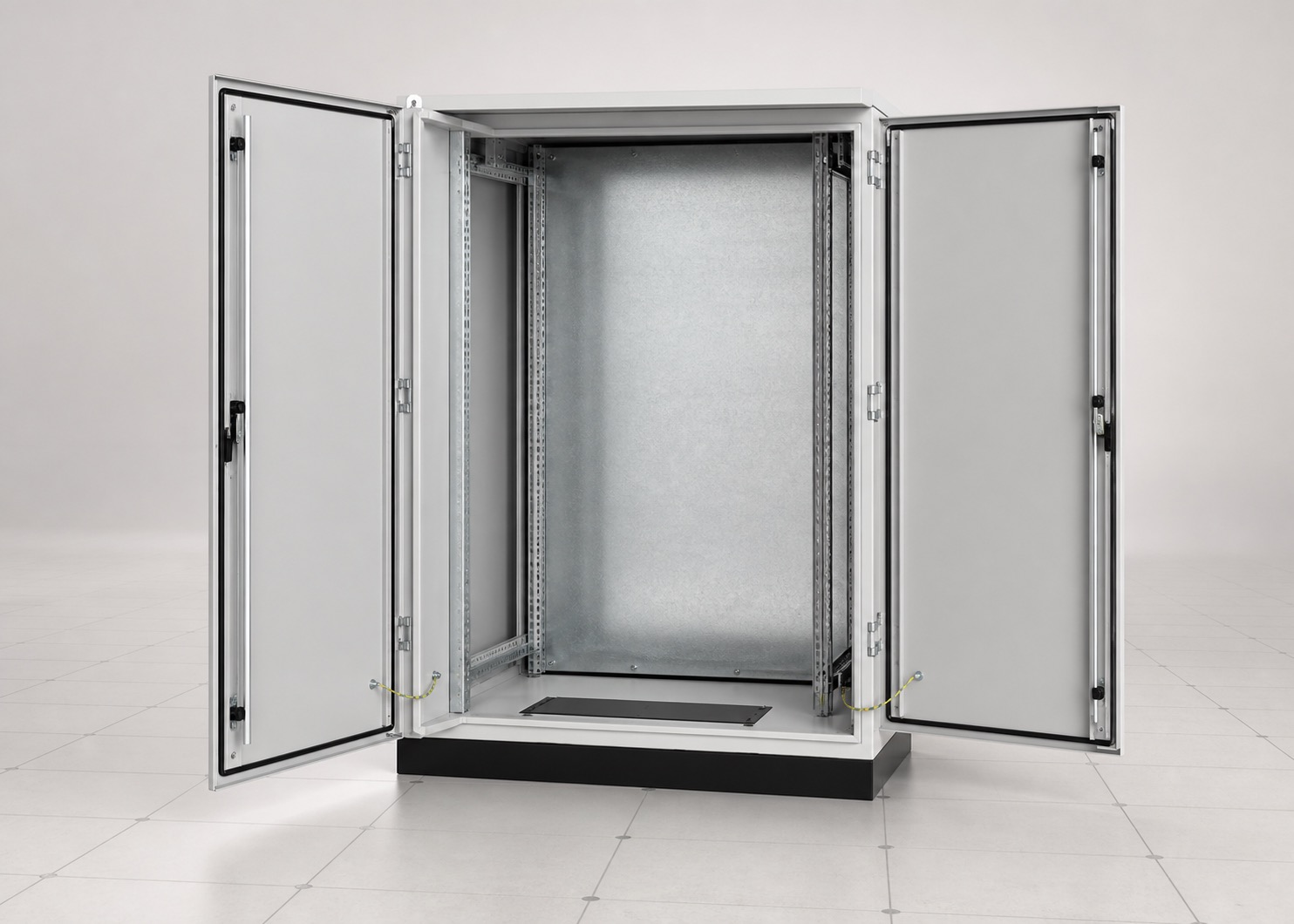
External dimensions include door, frame, folds, gasket and plinth; compare the real mounting-plate and door-device clearances.
Resolve heat and airflow
Compile device losses and confirm natural convection, filtered ventilation, exchanger or cooling requirements before closing the size.
Plan access and transport
Check door swing, aisle, lifting, split sections, site openings, floor loading and whether the assembly must ship in multiple bays.
Release growth and options
Show spare rail, terminal and duct capacity plus any future bay, plinth, side panel or thermal accessory on the approved layout.
Buyer checklist
Inputs for enclosure selection guide
- Complete device list and dimensions
- Required manufacturer clearances
- Terminal and cable-entry schedule
- Heat-loss and ambient data
- Door devices and service access
- Future spare-capacity target
Common mistakes
Risks in this decision
- Choosing external size before drawing the layout
- Ignoring cable bend radius and terminal access
- Using external dimensions as mounting-plate dimensions
- Adding cooling hardware after the cut-outs are released
Common Enclosure selection guide searches
Answers before the technical release
These answers summarize the guide. Final compatibility, ratings, accessories and availability still require the exact article number and current source information.
What is the direct answer for this enclosure selection guide?
Do not select an enclosure from the component face dimensions alone. Lay out the equipment with manufacturer clearances, wiring ducts, terminals, cable bend radius, heat-management hardware, door devices and spare capacity; then release the external size and usable mounting area together.
What information should a buyer prepare for enclosure selection guide?
Prepare complete device list and dimensions, required manufacturer clearances, terminal and cable-entry schedule, heat-loss and ambient data, door devices and service access. Missing information should be recorded as an assumption before release.
Which decisions can change the result?
Review map the equipment envelope, reserve wiring space, check usable mounting area, resolve heat and airflow. The complete project and article-number context determines the final answer.
What are the common mistakes in enclosure selection guide?
Choosing external size before drawing the layout; Ignoring cable bend radius and terminal access; Using external dimensions as mounting-plate dimensions; Adding cooling hardware after the cut-outs are released.
How should the final answer be verified?
Confirm current ratings, compatibility, lifecycle, mandatory accessories and application limits against the complete Siemens article number and cited manufacturer information before quotation or technical release.
Continue the decision
Pages related to enclosure selection guide
Technical references
Sources for this guide
Ratings, compatibility and lifecycle details referenced in how to select an industrial electrical enclosure size must be verified again against the exact article number at quotation.
Apply this guide