
VFD panel sizing
Connect current and duty to drive accessories, losses, cooling, EMC and maintainability.
Panel engineering library
Technical planning resources for panel sizing, control power, drawings, FAT and the questions buyers should resolve before release.
Request technical reviewGood panel engineering connects electrical duty, environment, physical layout, interfaces, documents and acceptance. These guides help buyers prepare usable inputs and review proposals without assuming that a product list alone defines a professional assembly.
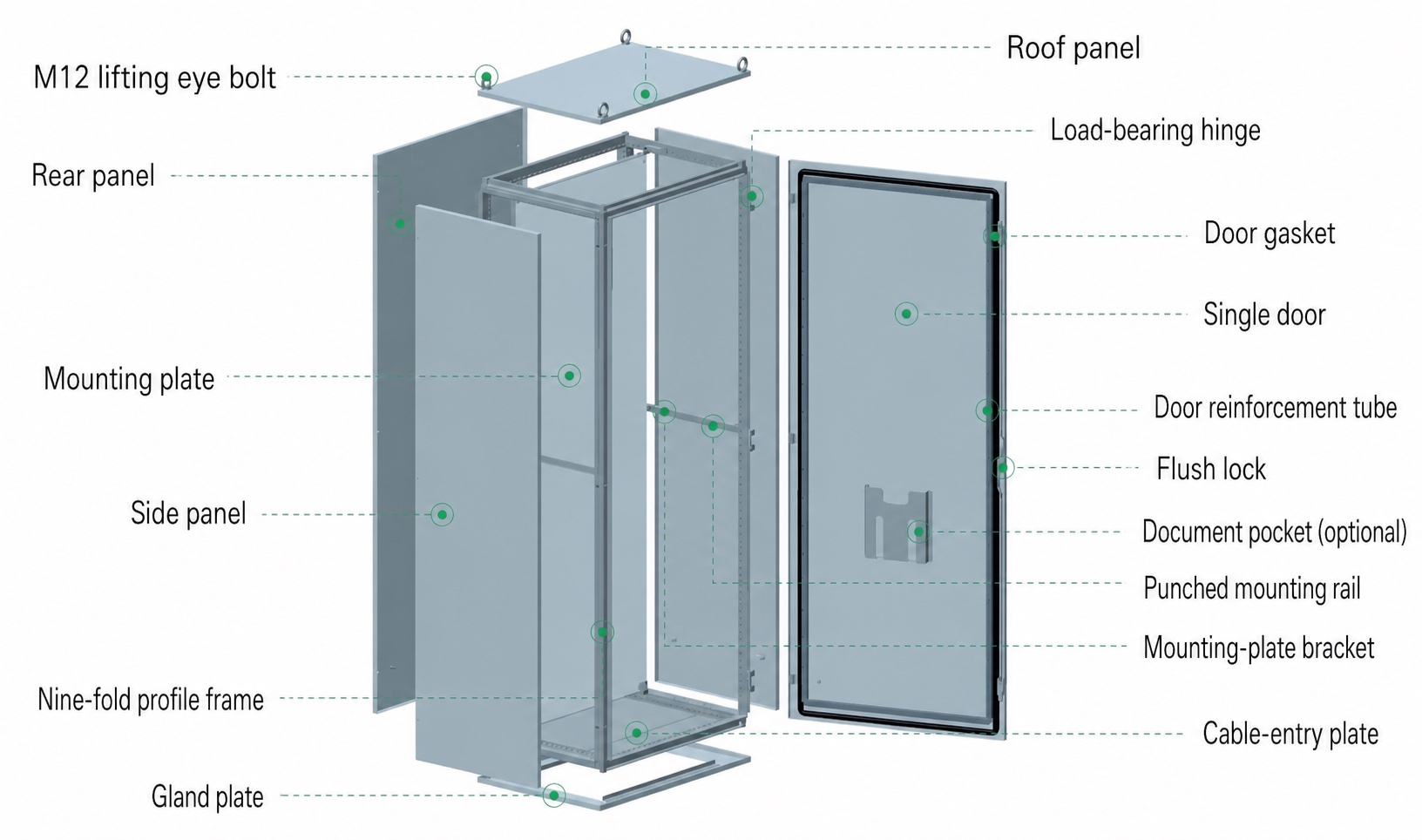
Mechanical construction, installed equipment, wiring space, cooling, access, drawings and FAT evidence are released as one technical package.
Resources decision framework
For control panel engineering guides, the quotation and technical response should address vfd panel sizing, plc panel design, documentation and the remaining project boundary. Missing inputs are recorded as assumptions before selection or design release.
Connect current and duty to drive accessories, losses, cooling, EMC and maintainability.
Define architecture, control power, I/O, networks, enclosure and software ownership.
Approve the BOM, drawings, settings, revisions and as-built deliverables before shipment.
Create test cases and evidence that match the released design and workshop limitations.
Planning input
Technical completeness makes quotations easier to compare.
Common buyer questions
These answers cover the questions buyers usually ask when evaluating control panel engineering guides. Final product identity, ratings and deliverables are still verified against the complete article number and agreed project data.
Provide load and I/O lists, supply, environment, functional scope, interfaces, destination, standards basis, documents and test expectations.
Compile device and accessory losses at the operating duty, then account for ambient, altitude, enclosure, airflow restrictions and required internal temperature.
The BOM, drawings, interfaces, assumptions, substitutions and FAT basis should have a visible approval status.
The design must provide access, simulation points, software behavior and records needed for the agreed tests; these are difficult to add after assembly.
Define the technical scope